
How Do BRCA1 and BRCA2 Mutations Cause Breast Cancer?
A mutation in the BRCA gene, specifically BRCA1 or BRCA2, significantly increases a woman’s lifetime risk of developing breast cancer. Read this blog to know more.

A technology-led, purpose driven oncology platform, enabling discovery through delivery of care
A mutation in the BRCA gene, specifically BRCA1 or BRCA2, significantly increases a woman’s lifetime risk of developing breast cancer. Read this blog to know more.
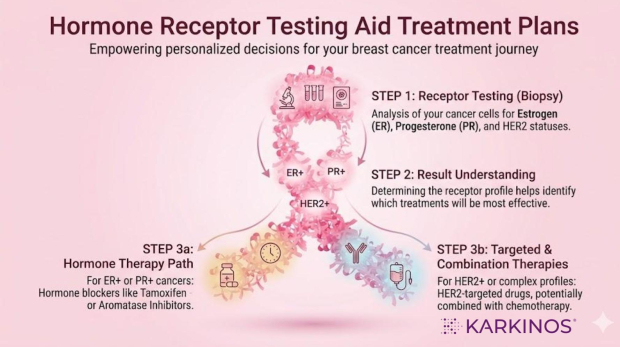
Hormone receptor testing determines whether breast cancer cells express Estrogen Receptor and Progesterone Receptor, helping identify tumors that depend on hormonal signaling for growth. This information is critical as it plays a central role in guiding treatment decisions and prognosis.