
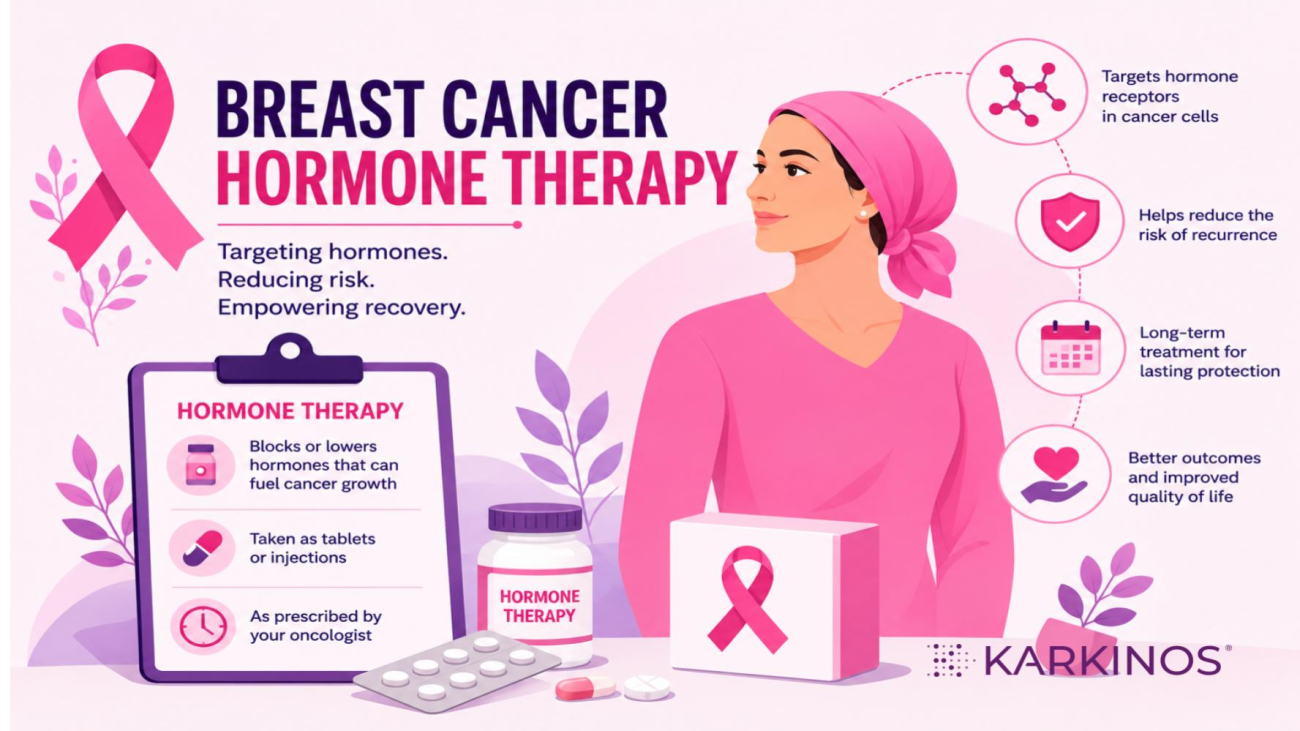
Hormone therapy or endocrine therapy is a long-term treatment that helps take away the hormonal support that some breast cancer cells need to grow. For patients with hormone receptor-positive breast cancer, it can be an important part of treatment after surgery and may also be used before surgery or when the disease has returned or spread.
Do I really need to take it?
If your lab test says your cancer is Hormone Receptor-Positive (HR+), yes, taking hormone therapy is very important.
Even after successful surgery or chemotherapy, tiny cancer cells might still hide in the body. Taking hormone pills daily for 5 to 10 years reduces the risk of the cancer coming back by about 40%.
It is important to note that this is not the same as hormone replacement therapy given during menopause. Hormone replacement therapy adds hormones, but cancer hormone therapy blocks them.
It is very common to mix these two up because they both use the word hormone. However, they do the exact opposite things in your body.
Many breast cancers need natural body hormones (like estrogen) to grow. Think of estrogen as “food” or “fuel” for the cancer cells. Hormone therapy is a daily treatment that cuts off this food supply so the cancer cannot grow or come back. |
How Hormone Therapy Works
Some breast cancer cells act like tiny engines that use estrogen as fuel to multiply. Hormone medicine works in two main ways to starve these cells:
- Option A (Blocking): It locks the door to the cancer cell so estrogen cannot enter (e.g., Tamoxifen).
- Option B (Stopping Production): In post menopausal women, it tells the body to completely stop making oestrogen (e.g., Aromatase Inhibitors like Letrozole or Anastrozole).
Which Medicine is Right for You?
| Cancer Type | What It Means | Does Hormone Therapy Work? |
| ER+ (Estrogen Positive) | Cells have docking sites for estrogen and use it as fuel. | Yes. Daily pills block the estrogen. |
| PR+ (Progesterone Positive) | Cells have docking sites for progesterone. | Yes. Usually treated alongside ER+. |
| HR+ (Hormone Positive) | The cancer is either ER+, PR+, or both. | Yes. Treatment usually lasts 5 to 10 years. |
| HER2+ (HER2 Positive) | Cells have extra HER2 proteins that make cancer grow faster. | Depends. Treated with HER2-targeted therapy, plus hormone therapy if it is also HR+. |
| TNBC (Triple-Negative) | Tests negative for estrogen, progesterone, and HER2. | No. Treated with chemo, immunotherapy, or radiation instead. |
Your oncologist (cancer doctor) does not use a “one-size-fits-all” approach. They will look at your tumour’s specific traits to choose the best treatment.
Key Factors Your Doctor Considers
- Menopausal Status: Premenopausal women usually get Tamoxifen (to block estrogen). Postmenopausal women usually get Aromatase Inhibitors (to stop estrogen production).
- Cancer Stage: It can be given before surgery to shrink large tumours, after surgery to prevent the cancer from returning, or long-term to control advanced stages.
- Your Overall Health: Your doctor will factor in your bone health, blood clot risks, and future fertility goals.
- Genetic Testing: Tests like the Breast Cancer Index help predict if you need the medicine for 5 years or up to 10 years.
When and How is it Given?
Hormone therapy is highly convenient and designed for minimal disruption. There are no hospital stays or long IV drips.
- Timing with Chemotherapy: If your treatment plan includes chemotherapy, hormone therapy is given after chemo is fully finished. Chemo targets fast-growing cells, while hormone therapy puts cancer cells to sleep.
- Daily Tablets: The most common method. You simply swallow one pill every day at home.
- Injections: Some premenopausal women get a quick injection under the stomach skin every 1 to 3 months to pause their ovaries. This takes less than two minutes at a clinic or can be done by a home nurse.
Managing Side Effects and Weight
Because these medicines lower estrogen, the side effects feel similar to sudden menopause.
Simple Fixes for Common Side Effects
- Hot Flashes: Dress in “peelable” layers of light cotton. Avoid triggers like spicy food, caffeine, alcohol, and stress. Doctors can also prescribe safe, non-hormonal medicines (like Gabapentin or Veozah) to help.
- Weight Gain: Lower estrogen slows your metabolism. Combat this with a 30-minute daily brisk walk, light strength exercises, and a simple diet (focus on dal, eggs, sprouts, vegetables, and paneer; limit sugary and fried foods).
- Joint and Bone Pain: Stay active with light yoga or walking. Take Calcium and Vitamin D tablets as prescribed by your doctor to protect your bones.
- Tiredness and Mood: Get regular rest, try talking therapies like Cognitive Behavioural Therapy (CBT), and lean on family or support groups.
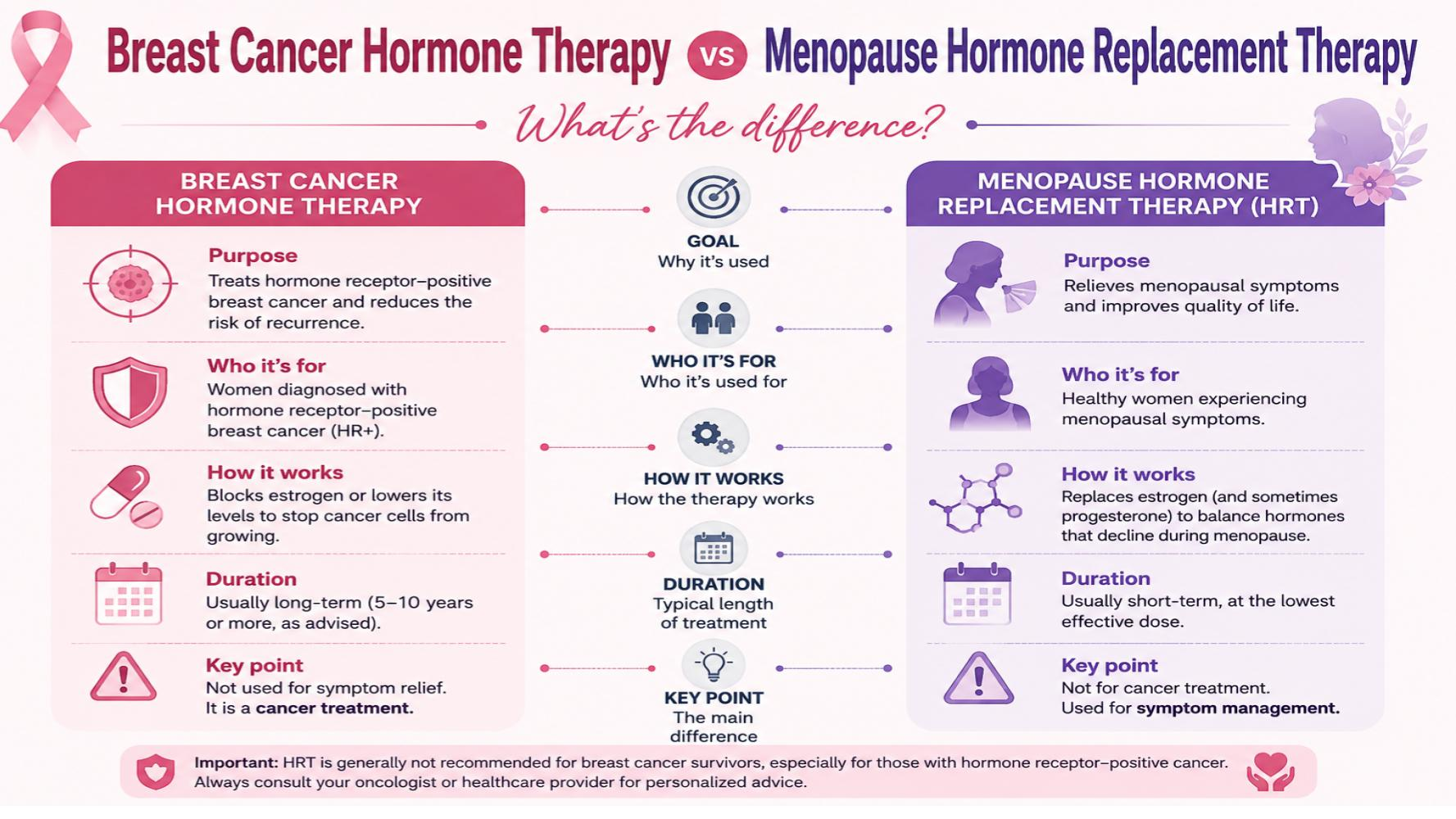
Breast Cancer Hormone Therapy vs. Menopause HRT
These two treatments are complete opposites and usually cannot be mixed.
| Feature | Menopause HRT | Breast Cancer Hormone Therapy |
| The Goal | Relieve uncomfortable menopause symptoms. | Starve cancer cells to prevent them from growing back. |
| How It Works | Adds estrogen into your body. | Removes or blocks estrogen. |
| The Clash | Adding estrogen could accidentally feed breast cancer cells. | Causes menopause-like symptoms because it removes estrogen. |
Important Note: Always talk to your oncologist before trying any menopause supplements (like soy or black cohosh). Many contain “plant estrogens” that might act like real estrogen in your body.
Myths vs. Facts
- Myth: Hormone therapy is the same as hormone replacement therapy (HRT).
Fact: They are complete opposites. One blocks hormones; the other adds them. - Myth: Every breast cancer patient needs hormone therapy.
Fact: No. It is only useful when the cancer is hormone receptor-positive (HR+). - Myth: It is only for advanced breast cancer.
Fact: It is very commonly used for early-stage cancer to reduce the risk of it returning. - Myth: Hormone therapy means the cancer is officially cured.
Fact: It significantly reduces the risk of return, but it does not guarantee the cancer will never come back. - Myth: It is a short-term treatment.
Fact: It is a long-term commitment, usually lasting between 5 and 10 years. - Myth: If it causes side effects, you must stop taking it.
Fact: Never stop on your own. Your doctor can help manage side effects, adjust your dose, or switch your pill. - Myth: Hormone therapy is only for women.
Fact: Men can also develop HR+ breast cancer and receive hormone therapy (usually Tamoxifen).
Common Hormone Therapies Available in India
In India, the hormone therapies used for breast cancer are the same standard medications used globally. They are widely available and are prescribed based on whether a woman has gone through menopause, as well as the specific characteristics of her cancer.
Here are the most common hormone therapies prescribed in India:
Drugs that Block Estrogen (SERMs)
These drugs lock the estrogen receptors on breast cancer cells so estrogen cannot attach and fuel their growth.
- Tamoxifen: This is the most common and widely used hormone therapy for premenopausal women (women who have not yet gone through menopause). It is taken as a daily pill.
Drugs that Stop Estrogen Production (Aromatase Inhibitors)
These are primarily prescribed for postmenopausal women. They stop the body’s fat and muscle tissues from making estrogen. They are all taken as daily pills.
- Letrozole (Common brand names in India include Femara, Letroz, etc.)
- Anastrozole (Common brand names include Arimidex, Altraz)
- Exemestane (Common brand names include Aromasin)
Drugs that Pause the Ovaries (LHRH Agonists)
An LHRH Agonist (Luteinizing Hormone-Releasing Hormone Agonist) is a type of medicine that acts like a temporary “pause button” for the ovaries. In simpler terms, doctors often call this treatment ovarian suppression.
For premenopausal women, doctors may want to stop the ovaries from making estrogen altogether. These are given as injections, usually once a month or once every few months.
- Goserelin (Commonly known by the brand name Zoladex)
- Leuprolide (Commonly known by the brand name Lupron)
Drugs that Destroy Estrogen Receptors (SERDs)
These are usually reserved for advanced breast cancer or when other hormone treatments have stopped working. They work by breaking down the estrogen receptors on the cancer cells.
- Fulvestrant: Commonly known by the brand name Faslodex. This is given as a monthly injection.
A Quick Note on Availability: All of these medications are manufactured and sold by various Indian pharmaceutical companies (like Cipla, Sun Pharma, Biocon, and Dr. Reddy’s), which makes both the branded versions and their more affordable generic versions easily available in pharmacies across the country.
Are the Benefits Worth It?
Yes, absolutely. The main goal of hormone therapy is to save your life and stop the cancer from returning. While side effects like hot flashes or joint pain can be uncomfortable, they are highly manageable. You can carry on with your normal daily routine, work, and household activities while protecting your long-term health.
Medical disclaimer: This article is for general educational purposes only and does not constitute medical advice. Guidelines vary by centre, patient profile, and resource availability. Always consult a qualified oncologist or breast cancer specialist for individual guidance.
Karkinos Healthcare