
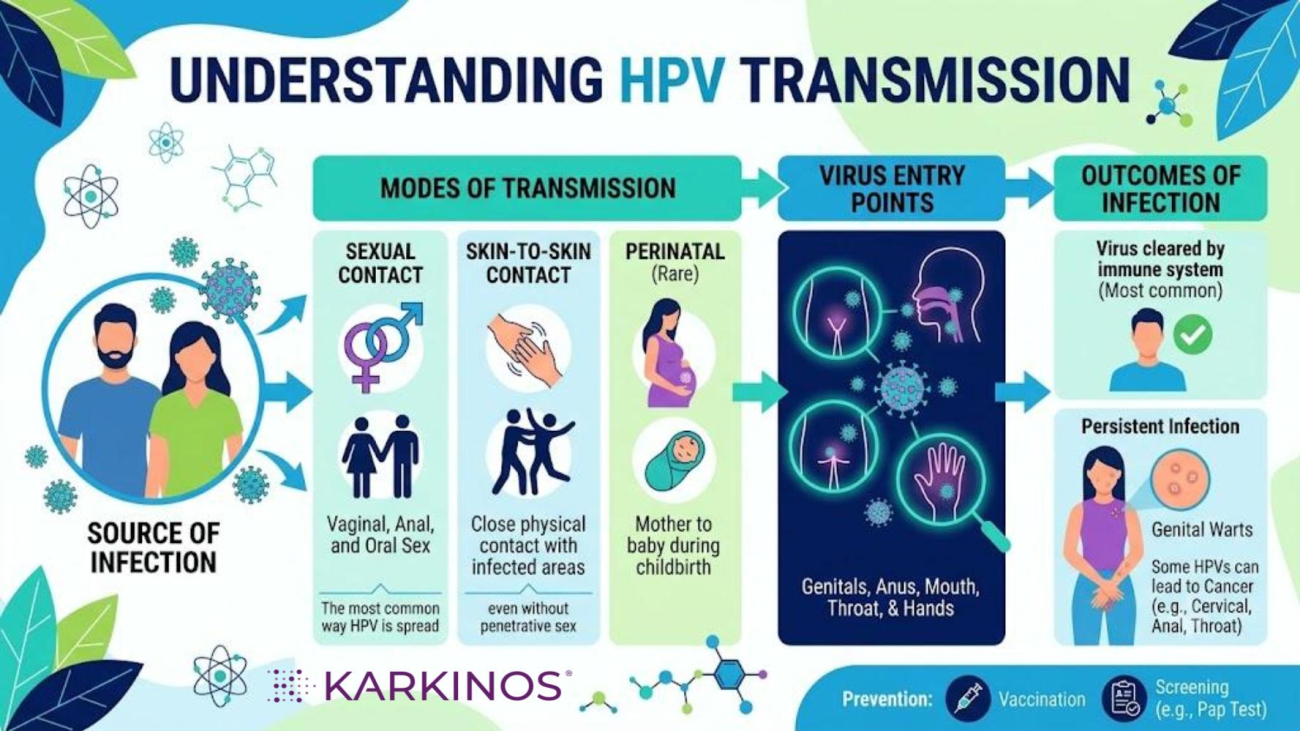
If you’ve ever felt confused about how HPV (Human Papillomavirus) spreads, you’re not alone. HPV is one of the most common sexually transmitted infections worldwide, yet it remains widely misunderstood. Many people assume that HPV spreads only through penetrative sex, which can lead to unnecessary shame, stigma and misunderstanding.
Let’s clear up some common misconceptions.
HPV Spreads Through Intimate Skin-to-Skin Contact — Not Just Intercourse
HPV is transmitted primarily through intimate skin-to-skin contact involving an infected area. It does not require the exchange of semen, blood or other bodily fluids.
HPV can therefore spread through:
- Vaginal or anal sex
- Oral sex
- Genital-to-genital contact without penetration
- Intimate skin-to-skin contact involving the genital area
Transmission from mother to baby around the time of childbirth is possible but uncommon.
Because HPV can infect areas not covered by a condom, condoms and other barrier methods reduce the risk of HPV transmission but cannot provide complete protection. Vaccination therefore provides an important additional layer of prevention.
You Usually Cannot Tell Who Has HPV
One of the reasons HPV is so common is that most HPV infections cause no symptoms. A person may have HPV without knowing it and may transmit the infection without realising they have it.
HPV infection is extremely common among sexually active people. Having HPV does not mean that someone has been promiscuous, careless or unfaithful. It is a common viral infection that can affect anyone who is sexually active.
Having One Partner Does Not Mean Zero Risk
HPV can be acquired during a person’s first sexual experience. It can also be present in a long-term relationship because a partner may have acquired the infection before the relationship began.
Importantly, an HPV-positive result cannot tell you when you acquired the infection or from whom. HPV can remain undetected for years, and detection of HPV does not by itself indicate recent transmission or infidelity.
Therefore, marital status or the number of previous partners is not a reliable way of determining whether someone has HPV.
Most HPV Infections Clear Naturally
The immune system clears most HPV infections naturally, usually within one to two years, particularly in younger, immunocompetent individuals.
The concern arises when high-risk HPV infection persists. Persistent infection with certain high-risk HPV types can cause precancerous changes and, over many years, may lead to cancers of the cervix and other sites.
This is why regular cervical cancer screening is important even when you feel completely healthy. Depending on age, risk factors and local guidelines, screening may involve an HPV test, HPV DNA testing, or cytology (Pap smear).
HPV Vaccination: Prevention Is Better Before Exposure
HPV vaccination works best when given before exposure to HPV, which is why routine vaccination is recommended during early adolescence.
In India, HPV vaccination is commonly recommended for girls and boys aged 9–14, with schedules depending on age and the vaccine used.
However, people who are older or already sexually active may still benefit from vaccination because they may not have been exposed to all the HPV types covered by the vaccine. The vaccine prevents new HPV infections; it does not treat an existing HPV infection or an established HPV-related lesion.
The decision to vaccinate at an older age can be discussed with a healthcare professional based on individual circumstances and local recommendations.
What This Means for You
The most important message is simple:
HPV is common. HPV is preventable. And having HPV says nothing about a person’s character, morality or choices.
If you are eligible, consider HPV vaccination. Follow recommended cervical cancer screening even if you feel perfectly healthy. If you receive an HPV-positive or abnormal screening result, don’t panic—but don’t ignore it either. Most HPV infections do not lead to cancer, and appropriate follow-up can identify and treat precancerous changes before they become cancer.
And remember: an HPV diagnosis is not a verdict. It is an opportunity for prevention, screening and timely care.
Talk openly with your healthcare provider, rely on evidence rather than assumptions, and take the right preventive steps at the right time.
Prevention, vaccination and screening can make a real difference in the fight against HPV-related cancers.
Medical disclaimer: This article is for general educational purposes only and does not constitute medical advice. Guidelines vary by centre, patient profile, and resource availability. Always consult a qualified oncologist or breast cancer specialist for individual guidance.
Karkinos Healthcare