
Cervical cancer is almost always caused by a long-lasting, persistent infection with high-risk human papillomavirus (HPV). In India, it remains one of the most common cancers among women. The good news is that modern medicine allows us to identify risk early—long before cancer develops—and to tailor treatment directly to the tumour if cancer does occur. Here is what every woman should know.
HPV DNA testing vs. the traditional Pap smear
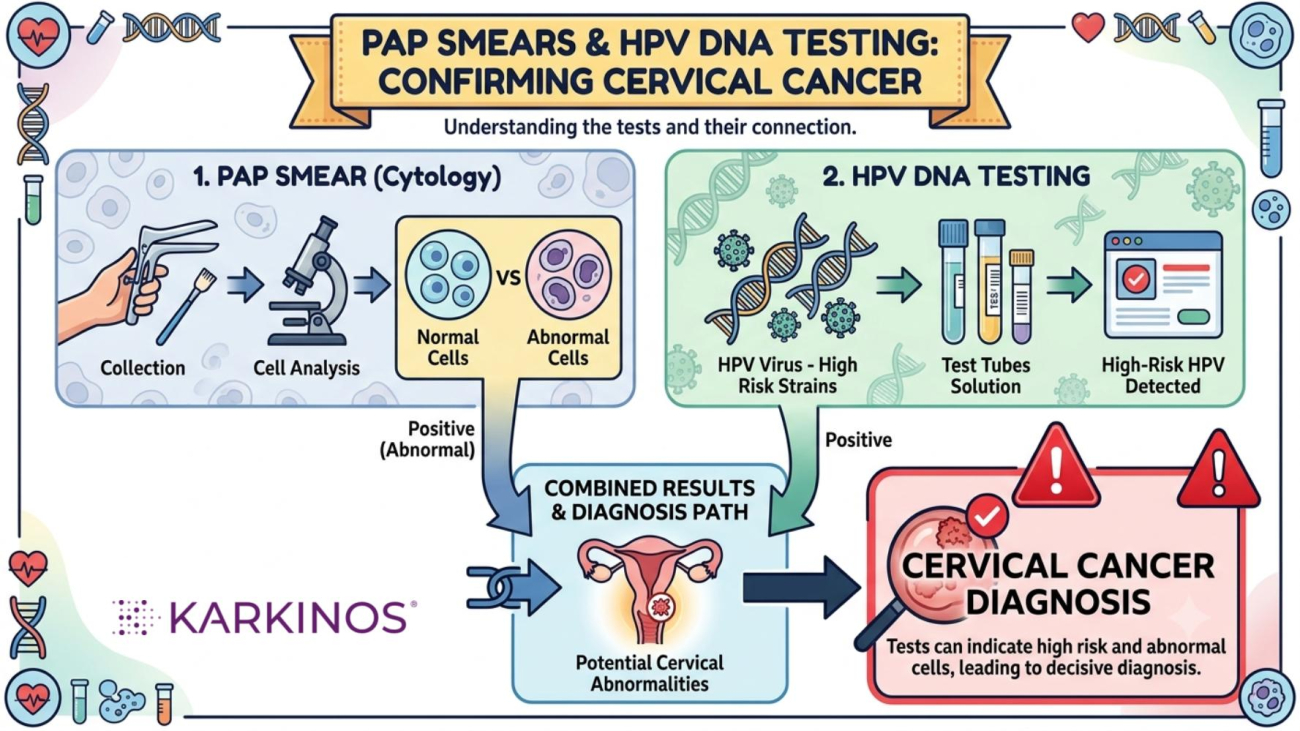
While both tests collect cells from the cervix during a routine pelvic exam, they look for fundamentally different things:
- Pap Smear (Cellular Examination): A pathologist examines cervical cells under a microscope for abnormal shapes or sizes. The pathologist also looks for cellular damage that has already occurred.
- HPV DNA Testing (Viral Identification): Uses advanced molecular technology, primarily PCR (Polymerase Chain Reaction), to detect the genetic material of high-risk HPV strains (specifically types 16 and 18). It identifies the root cause before any changes in cells occur.
Why the Difference Matters
Because the HPV DNA test detects the virus itself, it serves as an earlier warning system. The test is more sensitive than a standard Pap smear, meaning it misses fewer early risks.
- Screening Intervals: A negative HPV DNA result provides longer-term reassurance. Guidelines allow women with a negative HPV DNA test to safely wait 5 years between screenings, compared to 3 years for a standard Pap smear.
- Community Screening Camps: Traditionally, outreach camps relied on Pap smears or Visual Inspection with Acetic Acid (VIA) for immediate visual evaluation in camps where laboratory-based resources are limited. However, HPV DNA testing is becoming the modern gold standard for community health because it allows self-sampling (women can comfortably collect their own samples), which are then processed in batch testing facilities.
How to take appropriate action based on the test results?
My Pap smear is negative; am I safe?
A negative Pap smear means no abnormal cells were visible, providing strong reassurance for the next 3 years only. However, it does not mean you can stop screening permanently. To gain maximum protection, women aged 30 and older are encouraged to transition to HPV DNA testing (or co-testing) at their next interval to safely extend their screening window to 5 years.
What does a positive HPV DNA result mean?
Seeing “positive” on a lab report can be alarming, but a positive HPV DNA result does not mean you have cancer.
HPV is extremely common. Most healthy immune systems clear the virus naturally within 1 to 2 years without medical intervention. Only persistent infections that last 10 to 15 years can turn into precancer or cancer.
If your HPV DNA test comes back positive, your doctor will likely recommend:
- A Pap Smear or Viral Genotyping: To check if high-risk types (HPV 16 or 18) are present or if cell changes have begun.
- A Colposcopy: A quick, in-office examination using a magnifying instrument to closely inspect the cervix.
- A Follow-Up Test: Repeat the HPV test in 12 months to see whether your body cleared the virus on its own.
The True Role of Blood Tests
It is important to note that blood tests cannot diagnose cervical cancer; diagnosis requires a tissue biopsy. Once a diagnosis is established, blood tests fulfil specific supporting roles:
- Routine Pre-Treatment Panels: Complete blood counts and kidney/liver panels evaluate overall health and organ function before surgery, radiation, or chemotherapy.
- Liquid Biopsies (Future Outlook): Research is underway to study circulating tumour DNA (ctDNA) and viral DNA in the bloodstream for non-invasive monitoring, though these tests are not yet standard practice.
Screening is the best defence
Screening is your best defence against cervical cancer. A negative Pap smear gives clear reassurance for 3 years, while an HPV DNA test offers higher sensitivity and extends peace of mind to 5 years.
A positive HPV result is simply a prompt to monitor, not a cause for panic. Book your regular screening, follow up as your physician recommends, and encourage the women in your life to do the same.