
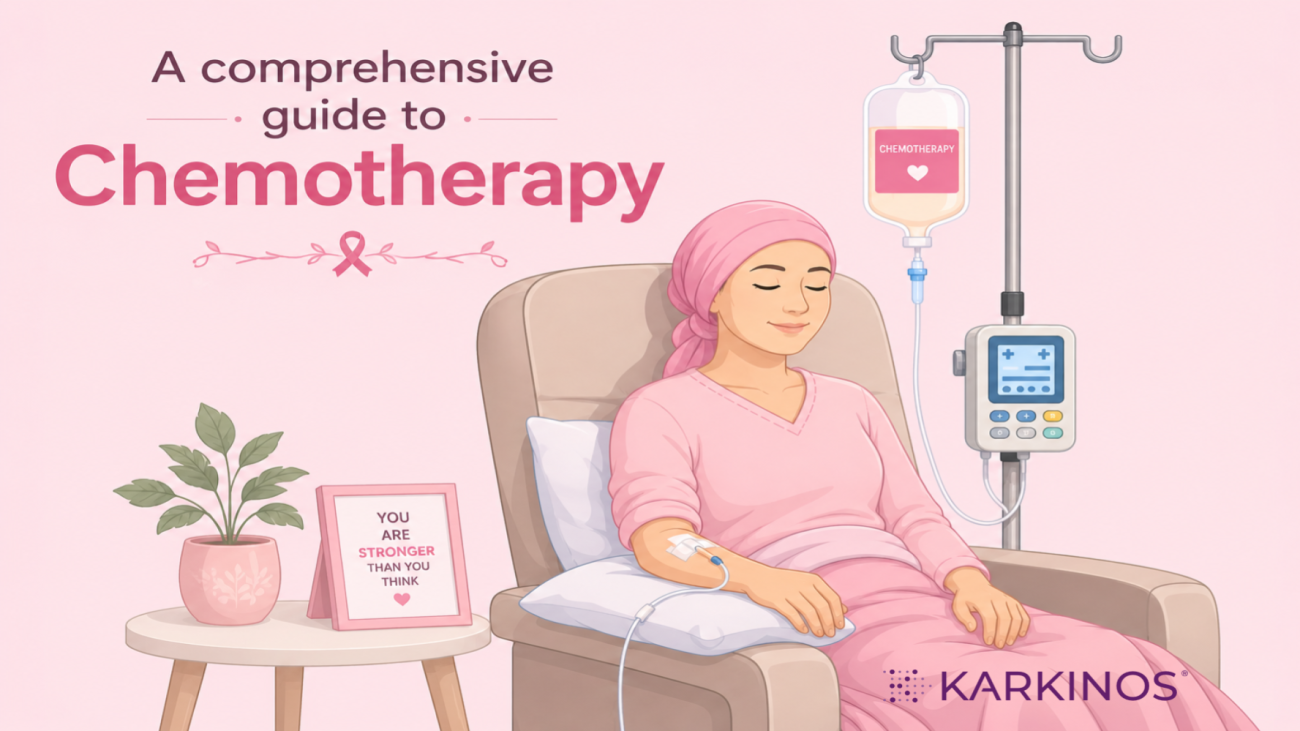
Most of the fear around a first chemotherapy session comes from not knowing what to expect. Once you know the sequence, from pre-treatment checks to the infusion itself, the process feels far more manageable.
Here is a straightforward guide to what you can expect when starting chemotherapy for breast cancer.
The Big Picture: How Your Plan is Made
Before you even step into the clinic, a dedicated group of experts has carefully planned your treatment. This group is called the Tumour Board. It includes your surgeons, medical oncologists, radiation doctors, and pathologists. Instead of one doctor making a decision alone, this team reviews your specific reports together to create a personalised plan.
They will decide exactly how much chemotherapy you need. For breast cancer, a patient generally receives between 4 to 8 cycles over the course of 3 to 6 months. A “cycle” includes the day the medicine is given, followed by a 2 to 3-week rest period for your body to recover.
Chemotherapy might be given before surgery to shrink a tumour (making it easier to remove), or after surgery to clear out any microscopic cancer cells left behind.
Where It Happens
The good news is that you rarely need an overnight hospital stay. Chemotherapy for breast cancer is done in a day care centre or an outpatient clinic. You simply arrive for your appointment, receive your treatment while resting in a comfortable chair or bed, and go home the very same day.
How Many Chemotherapy Cycles Will be needed?
The number of chemotherapy sessions is not the same for everyone. It depends on the stage of the cancer, the type of cancer cells involved, and how the body responds to treatment. Here is a general guide to help you understand what to expect.
| Stage | Is Chemo Usually Needed? | Typical Number of Cycles | What This Means |
| Stage 0 (very early, non-invasive) | Usually not | Not applicable | Surgery alone, sometimes with radiation, is often enough |
| Stage I (small, early-stage) | Sometimes | Around 3–6 cycles (if chemotherapy is recommended) | Many patients with small, low-risk tumours may not need chemo at all |
| Stage II | Yes, commonly | Usually 4–8 cycles, depending on cancer type | May be given before surgery to shrink the tumour, or after surgery to lower the risk of recurrence |
| Stage III (locally advanced) | Yes, almost always | Usually 4 to 8 cycles | May be given before and/or after surgery. |
| Stage IV (spread to other organs) | Yes, ongoing | No fixed number | Treatment continues as long as it is working and side effects are manageable, with regular scans to check progress |
A few things to keep in mind:
- One cycle usually means one round of chemotherapy, followed by a rest period of 1 to 3 weeks to allow the body to recover. So 6 cycles could mean about 4 to 5 months of treatment in total.
- The stage of cancer is not the only factor. The type of cancer cells matters just as much. For example, triple-negative or HER2-positive breast cancers often need more intensive chemotherapy, regardless of stage, while hormone-receptor-positive cancers may rely more on hormone therapy alongside or instead of chemo.
- Your treatment plan is not fixed at the start and is not decided by a single doctor. It is usually reviewed by the tumour board. This team meets to plan the treatment sequence at the start, checks progress partway through, and confirms next steps once chemotherapy is complete.
If a scan shows the tumour is not responding as expected, the case is often discussed again by this team before any changes are made. - Every patient’s journey is different, and these numbers are a general guide, not a personal prediction. The right questions to ask your doctor are how many cycles are planned for you specifically, why, and whether your case has been reviewed by a tumour board.
Before the Treatment Begins
Your first appointment will take a little longer than future ones because your care team will walk you through everything.
Pre-Treatment Checks
Before you receive any chemotherapy, your nurses need to make sure your body is ready.
- Vital Signs: They will check your blood pressure, temperature, heart rate, height and weight. Your exact height and weight are used to carefully measure the right dose of medicine for you.
- Blood Tests: A quick blood test will check your white blood cells, red blood cells, and platelets. If your counts are too low, your doctor may delay the session for a few days to let your body recover.
Pre-Medications
Before the actual chemotherapy starts, you will receive pre-medications. These are drugs given to prevent side effects. They often include anti-nausea medicine, steroids to prevent allergic reactions, and sometimes mild anti-anxiety medicine to help you relax.
The Procedure Itself
Getting chemotherapy is usually a quiet, sitting-down process. It does not hurt when the medicine enters your body.
- Getting Connected: The nurse will deliver the medicine intravenously (through a vein). This is done using an IV line in your arm or hand. If you have a port (a small device surgically placed under your skin), the nurse will connect the IV line there.
- The Infusion: The medicine slowly drips into your bloodstream. This can take anywhere from one to several hours, depending on your specific treatment plan.
- What You Will Feel: Most people do not experience any physical pain during the drip. You might feel a slight cooling sensation as the fluid enters your vein. The steroids might make you feel temporarily energised, while allergy medicines might make you feel sleepy.
Dietary Guidelines: What to Eat
What you eat before and after your session can make a big difference in how your stomach feels.
Before Your Session
- Keep it light and bland: Eat a small, easily digestible meal before you arrive. Good options include curd rice, idli with a mild coconut chutney, poha, sabudhana or moong dal khichdi.
- Hydrate: Drink plenty of water the day before and the morning of your treatment.
After Your Session
- Eat small, frequent meals: Instead of three big meals, aim for five or six small snacks throughout the day. An empty stomach can actually make nausea worse.
- Focus on easy-to-digest foods: Soups, smoothies, plain crackers, and bananas are gentle on the digestive system.
- Avoid triggers: Stay away from heavy, greasy, spicy, or strong-smelling foods, as these can quickly trigger nausea.
- Keep drinking fluids: Sip on water, clear broths, or apple/lemon/sweet lime juice frequently to stay hydrated and help your body process the medication.
The Hours That Follow
Once the infusion is finished, the nurse will disconnect your IV or port.
- Observation: During your very first session, you will likely be asked to stay in the clinic for an extra 30 minutes. The medical team wants to monitor you for any immediate or unusual reactions.
- Heading Home: You will need a friend or family member to drive you home. You might feel perfectly fine, or you might start to feel tired or slightly dizzy from the pre-medications.
Common Immediate Side Effects
Side effects usually do not hit you the second you leave the clinic. They tend to build up over the first 24 to 72 hours.
- Fatigue: This is the most common symptom. You may feel a deep, heavy tiredness. Listen to your body and rest when you need to.
- Nausea: While modern anti-nausea drugs are excellent, you might still feel some queasiness or a loss of appetite.
- Taste Changes: Food might suddenly taste bland, salty, or have a metallic flavour.
- The Steroid Crash: The steroids given before chemo can give you a burst of energy on the first day, followed by a hard crash of tiredness a day or two later.
Practical Tips for Your First Day
Preparation is the best way to feel supported and comfortable.
- Pack a Chemo Bag: Take items that provide comfort and help pass the time. Pack a warm blanket, fuzzy socks (clinics can be very cold), a book, headphones, and a device loaded with your favourite movies.
- Take Snacks: Pack light snacks like crackers, ginger candies (great for nausea), and a water bottle.
- Wear Comfortable Clothes: Choose loose-fitting clothing with layers. If you have a port, wear a shirt with a loose collar or a V-neck so the nurse can easily access it.
- Take a Buddy: Having a trusted friend or family member sit with you can provide emotional support, help you remember what the doctor says, and keep you company.
Your first chemotherapy session is a major milestone. You are taking a powerful, active step in treating your cancer. Be gentle with yourself, allow yourself to rest, and never hesitate to tell your care team exactly how you are feeling.
Common Chemotherapy Medicines Used for Breast Cancer You may hear your oncologist mention specific drug names or combinations. Here are some of the most commonly used medicines, grouped by type, so the names sound familiar when your doctor discusses your plan. These medicines are widely used and are available at most cancer centres in India. Generic and biosimilar versions of many of these drugs help improve affordability, although costs may still vary depending on the treatment plan and hospital.
Your care team will also mention targeted therapies alongside chemotherapy if relevant, such as Trastuzumab for HER2-positive cancers. Biosimilar versions of Trastuzumab are now widely available in India, making this treatment more accessible and affordable. These targeted therapies are not traditional chemotherapy drugs, but they are often given during the same treatment period. Neoadjuvant vs Adjuvant: Same Medicines, Different Timing The drugs used for neoadjuvant (before surgery) and adjuvant (after surgery) chemotherapy are often the same or very similar. What changes is the sequence and the goal.
A patient may sometimes receive part of their chemotherapy before surgery and the remaining cycles after, depending on how the tumour responds and what the tumour board recommends. |
Complete the Chemo course for recovery
Completing your full course of chemotherapy, exactly as planned, matters more than most patients realise. Some worry that additional cycles are added without real medical reason, but every cycle is decided based on clinical evidence, how your specific cancer is responding, and what gives you the best chance of long-term recovery.
Studies consistently show that patients who complete their prescribed chemotherapy cycles have significantly better outcomes and lower chances of the cancer returning, compared to those who stop early.
Skipping or cutting short a cycle, even with good intentions, can allow remaining cancer cells to survive and regrow. Trusting the process and finishing what is planned is one of the most important things you can do for your own recovery.
Medical disclaimer: This article is for general educational purposes only and does not constitute medical advice. Guidelines vary by centre, patient profile, and resource availability. Always consult a qualified oncologist or breast cancer specialist for individual guidance.
Karkinos Healthcare