
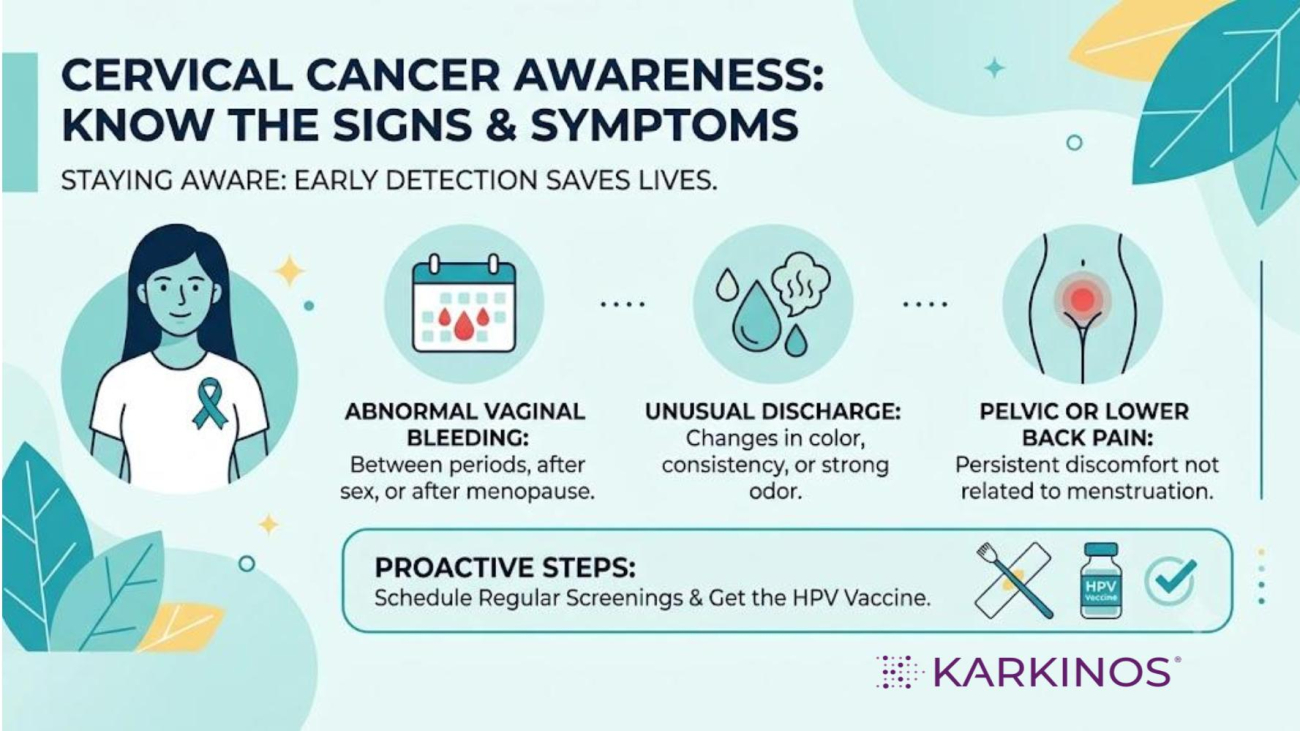
Health conversations can sometimes feel uncomfortable, but talking openly about cervical health can save lives. When it comes to cervical cancer, waiting for obvious symptoms before taking action is a risky, reactive approach; true prevention requires a proactive mindset focused on routine screening and self-awareness.
Cervical cancer is one of the most preventable and treatable forms of cancer, provided it is caught early. Yet because its early stages often develop quietly, without obvious signs, waiting until something feels wrong can cost critical time.
Recognising subtle warning signs, prioritising regular screenings, and listening to your bodily instincts are essential strategies for protecting your safety and well-being. It’s crucial to educate yourself about cervical cancer awareness, familiarise yourself with the warning signs, and take proactive steps to safeguard your health.
Here are some key signs to watch for in the fight against cervical cancer.
The Silent Stage: Why Screenings Are Non-Negotiable
In the initial precancerous stages, cervical cancer usually does not show any symptoms. Cellular changes on the cervix occur slowly, mainly because of persistent high-risk strains of the Human Papillomavirus (HPV). These changes typically occur without pain, discomfort, or visible warning signs.
This silent phase is why routine Pap smears and HPV screenings are so critical. A Pap smear detects abnormal cell changes before they become cancer, while an HPV test checks for the virus itself. When caught at this stage, precancerous changes can be treated easily long before cancer ever develops.
Key Symptoms to Watch For
As cervical cancer progresses beyond the early stage, symptoms begin to appear. Although these symptoms can sometimes be linked to less severe conditions, such as infections, benign polyps in the reproductive system, or hormonal imbalances, it is crucial to consult a qualified healthcare professional. A doctor, gynaecologist, or oncologist can evaluate you thoroughly and help determine the underlying cause, ensuring you receive any necessary treatment promptly and appropriately.
1. Light bleeding between periods
You may see a few drops of blood between two periods. Many women think it is due to stress or tiredness. Sometimes that is true. Birth control pills, an IUD, or an infection can also cause it.
If it happens once, it may not mean anything. If it happens again and again, consult a doctor. It helps to write down the dates and how much blood you see.
|
2. Bleeding after sex
Post-coital bleeding is the term used to describe bleeding that occurs after sexual intercourse. This can be a concerning and often uncomfortable experience for many women, leading some to feel hesitant or shy about discussing it. However, healthcare professionals consider this symptom significant.
They are trained to approach these discussions with sensitivity and without judgment, prioritising your health and well-being. If you experience this symptom, don’t hesitate to seek medical advice; your health is paramount, and open communication is key.
Remember, bleeding can happen because of an infection, a small growth called a polyp, or cervical irritation. A simple checkup can identify the cause. If treatment is needed, it is easier when started early.
3. Mild pain or heaviness in the lower belly
A dull pain in the lower belly or pelvis is easy to ignore. We often think it is gas or period pain. A few cramps now and then are normal. But if the pain stays for more than a few weeks, keeps coming back, or pain during sex starts, please consult a gynaecologist.
Other signs to watch for
Please also speak to a gynaecologist if you notice:
- Unusual vaginal discharge, such as watery, bad-smelling, or blood-stained discharge
- Periods that become much heavier or longer than usual
- Any bleeding after menopause, even a small amount
TABLE: Cervical Cancer Symptoms
| Category/ Stage | Specific Symptom | Details / What to Watch For |
| Precancerous / Early Stage | Asymptomatic Phase | Precancerous cellular changes and very early-stage cervical cancer usually produce no noticeable symptoms. Detection relies on routine Pap smears and HPV screenings. |
| Early to Progressive Stage | Abnormal Vaginal Bleeding | • Bleeding between regular menstrual periods • Heavy, prolonged, or unusual menstrual flow • Spotting or bleeding after sexual intercourse, douching, or pelvic exams • Any vaginal bleeding after menopause |
| Unusual Vaginal Discharge | • Watery, pale, pink, or brownish discharge • Heavy or persistent discharge • Discharge with a strong, foul, or unusual odour | |
| Pain During Intercourse | • Pain or discomfort during or immediately after sexual activity (dyspareunia) | |
| Pelvic / Lower Back Pain | • Unexplained, continuous ache in the lower abdomen, pelvis, or lower back unlinked to menstrual cramps or muscle strain | |
| Advanced Stage | Urinary & Bowel Changes | • Painful, difficult, or frequent urination • Blood in urine or stool • Painful bowel movements or rectal bleeding |
| Leg Swelling | • Swelling in one or both legs due to fluid buildup or blocked lymph vessels (lymphedema) | |
| Systemic Symptoms | • Unexplained, rapid weight loss and loss of appetite • Persistent, severe fatigue or general feeling of weakness |
Why do these signs get missed?
There are some common reasons:
- It is probably nothing: We say this to ourselves. This thought is common and often true. But a check-up is the only way to be 100% sure.
- Shyness: These topics are private or considered taboo, and many women find it hard to talk about them.
- Fear: Some women worry about bad news, so they avoid the doctor. But finding a problem early gives you more choices and easier treatment.
- No time: Taking care of others can make us forget ourselves, and one way to convince ourselves to postpone a consultation is to blame time.
What happens at the doctor’s visit?
The doctor will ask about your symptoms and your periods. You may have a simple pelvic exam. The doctor may also suggest a Pap smear or an HPV test. These tests check cervical cells for early changes. They are quick and usually not very painful.
If doctors find changes early, they can often treat them before they become serious.
How can you protect yourself?
Most cervical cancers are caused by a long-lasting infection with a virus called HPV. Two things help:
- Preventive HPV vaccine: It works best when given to girls before adulthood. Consult your gynaecologist to learn more.
- Regular screening: Indian health guidelines recommend screening for women from about age 30. You can get screened (Pap Smear test) even if you have no symptoms.
In short
- Bleeding between periods, bleeding after sex, and ongoing pelvic pain are not normal for most women.
- They often have simple causes, but you should still get checked.
- A new, unusual symptom that stays or keeps coming back is a good reason to see a gynaecologist.
- Regular screening can find problems early, even before symptoms start.
Medical disclaimer: This article is for general educational purposes only and does not constitute medical advice. Guidelines vary by centre, patient profile, and resource availability. Always consult a qualified gynaecologist, oncologist or cervical cancer specialist for individual guidance.
Karkinos Healthcare
media@karkinos.in