
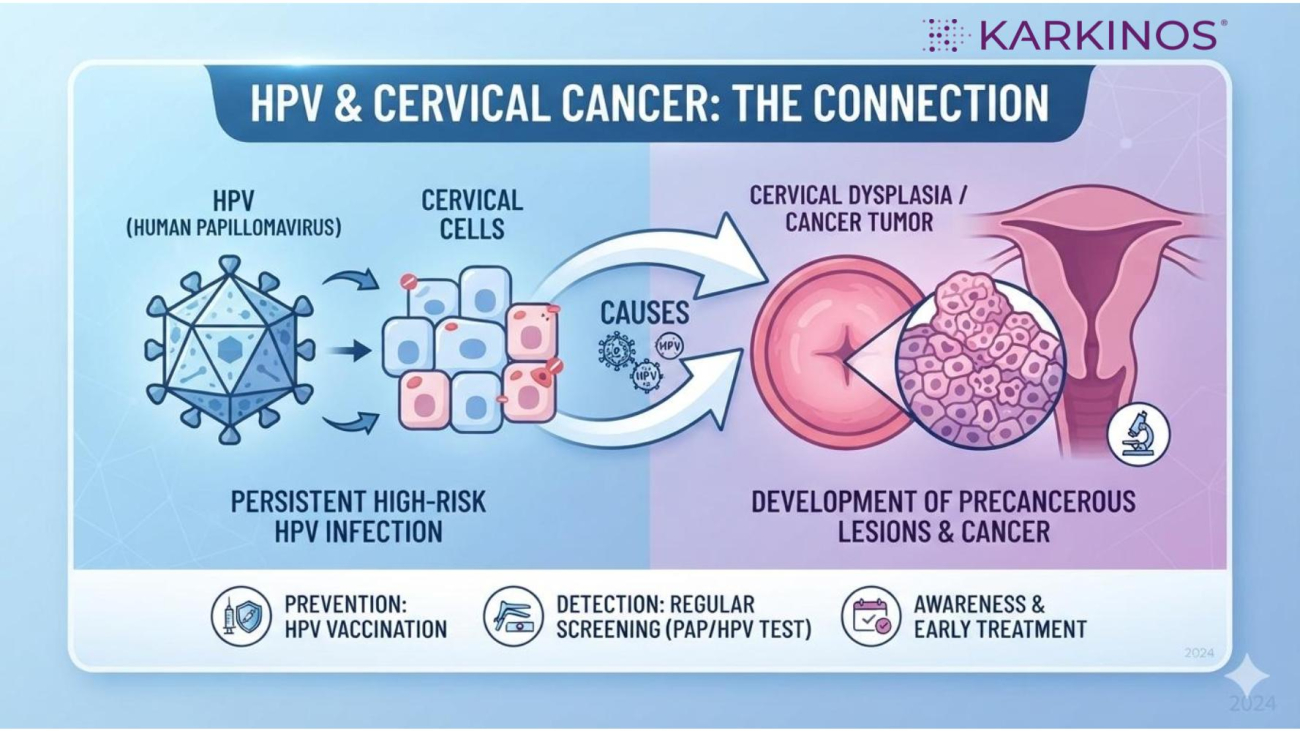
Knowing the connection between Human Papillomavirus (HPV) and cervical cancer
In our previous blog, we looked closely at the cervix’s structure and how it functions. With that picture in mind, it is time to look at the biggest threat to this part of the body. When we talk about cervical cancer, one name always comes up: the Human Papillomavirus, or HPV. It is the virus responsible for almost all cases of cervical cancer. But what exactly is this virus, and how does it find its way into the cervix to cause cancer?
Understanding HPV is the first step in protecting yourself and your loved ones. Here is a simple breakdown of what the virus is, how it works in the body, and the crucial differences between its types.
The high-risk strains are the ones we monitor closely when it comes to cervical cancer. HPV types 16 and 18 are the most dangerous, responsible for about 70% of all cervical cancer cases globally.
What is HPV?
HPV is not just a single virus. It includes more than 200 related viruses. It is incredibly common; in fact, it is the most common viral infection of the reproductive tract. Almost every sexually active adult will catch at least one type of HPV at some point in their lives. The virus is passed from one person to another through intimate skin-to-skin contact. Because it is so common and usually shows no symptoms, most people never even know they have it. What matters clinically is the split between low-risk and high-risk types, based on their cancer-causing potential. Low-risk types- HPV 6 and 11 are low-risk strains; they cause about 90% of genital warts (condylomata) and recurrent respiratory papillomatosis (warts in the airway, sometimes transmitted to infants during birth).
- These types infect tissue but generally don’t integrate into the host genome in a way that drives malignant transformation. They cause visible, often bothersome lesions but not cancer.
- IARC classifies about 14–15 types as high-risk. The two dominant ones are HPV 16 and HPV 18.
- HPV 16 alone accounts for roughly 50–60% of cervical cancers worldwide and is also the dominant type in HPV-driven oropharyngeal cancers.
- HPV 18 accounts for another 10–15%, and is disproportionately associated with cervical adenocarcinoma (a less common but harder-to-screen-for subtype, since Pap smears are better at catching squamous lesions).
- Other high-risk types — 31, 33, 45, 52, 58, and others — make up the remaining share, with some regional variation in prevalence. Some data suggest HPV 16/18 prevalence patterns in India are broadly similar to global figures, though there’s more regional heterogeneity in the “other high-risk” types than in Western data.
How Does HPV Behave in the Body?
When HPV enters the body, it infects the cells on the surface of the skin or the moist linings of the body, like the cervix. For most people, getting HPV is not a cause for panic. A healthy immune system usually does a good job fighting off the virus. In about 9 out of 10 cases, the body clears the infection on its own within one to two years, without causing any health problems. However, sometimes the immune system cannot clear the virus. When the virus stays in the body for many years, it is called a persistent infection. This is when HPV can start to cause problems, depending on the specific strain of the virus.High-Risk vs. Low-Risk HPV: What is the Difference?
Out of the 200+ types of HPV, about 40 affect the genital area. Scientists divide these into two main groups: low-risk and high-risk strains.| Feature | Low-Risk HPV Strains | High-Risk HPV Strains |
| Cancer Risk | Do not cause cancer. | Can cause cervical and other cancers. |
| Common Strains | HPV 6 and HPV 11 | HPV 16 and HPV 18 |
| Health Impact | Can cause genital warts or minor, harmless cell changes. | Can cause long-lasting infections that alter cells, leading to cancer over time. |
How High-Risk HPV Leads to Cervical Cancer
If a high-risk HPV strain stays in the cervix for a long time, it starts to hijack the normal cells. It forces these healthy cells to change and multiply abnormally. These early changes are called precancers. They are not cancer yet, and they do not cause pain or bleeding, and also not clinically visible. If left entirely unchecked, these precancerous cells can continue to grow and slowly turn into cervical cancer. This process is not overnight; it usually takes 10 to 20 years for an HPV infection to become cancer.The Good News: You Can Stop It
Because it takes so long for HPV to cause cancer, we have plenty of time to stop it. Here is how:- The HPV Vaccine: The vaccine is a powerful shield. If given early (ideally before a person becomes sexually active), it protects against the most dangerous high-risk strains, including HPV 16 and 18.
- Screening Tests: Regular screening is your best defence. A Pap smear looks for those early cell changes in the cervix so they can be removed before they turn into cancer. An HPV test looks for the DNA of high-risk HPV strains, warning your doctor that you need closer monitoring.