
By Karkinos Content Team
For most of us, the word ‘cancer’ immediately evokes fear, as we tend to picture it as an aggressive, fast-spreading, and life-threatening disease that leaves very little time between diagnosis and treatment.
Or we often worry about cancer developing silently and advancing before we even realise something is wrong. However, when it comes to cervical cancer, the reality is different.
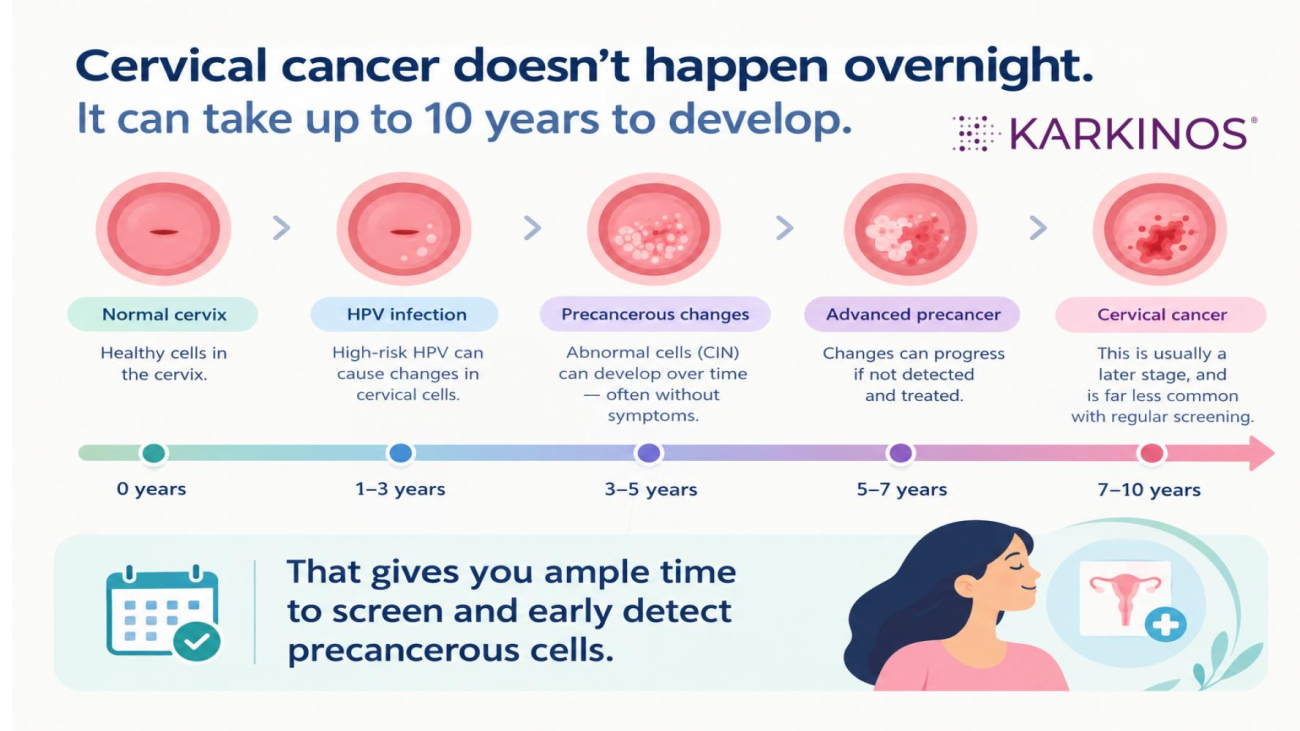
Cervical cancer is unique because it is one of the only cancers that gives a woman ample time to detect early changes through routine screening tools. Unlike fast-spreading cancers that can develop rapidly and quietly, cervical cancer moves at a remarkably slow pace. This generous timeline means every woman has multiple opportunities to test herself before subtle cellular changes progress to cancer.
Routine screenings, such as Pap smears/HPV DNA testing, can reveal changes in cervical cells long before they progress into cancer, providing a crucial window of time for detection and intervention. This proactive approach emphasises the importance of regular check-ups in preventive healthcare.
To appreciate why you have so much time on your side, it helps to understand how the disease naturally develops over time.
Step 1: The Initial HPV Exposure
Almost all cases of cervical cancer begin with an infection from Human Papillomavirus (HPV). HPV is an extremely common virus that most sexually active individuals will encounter at some point in their lives.
In most women, the body’s immune system clears the virus naturally within one to two years without causing lasting harm. Having an HPV infection does not mean you have cancer, nor does it mean cancer is inevitable.
AI GENERATED IMAGE
Step 2: Persistent Infection & Precancerous Changes
In a small percentage of cases, high-risk strains of HPV manage to linger in cervical cells for many years without being cleared by the immune system. Over time, this persistent virus can cause normal cervical surface cells to become abnormal.
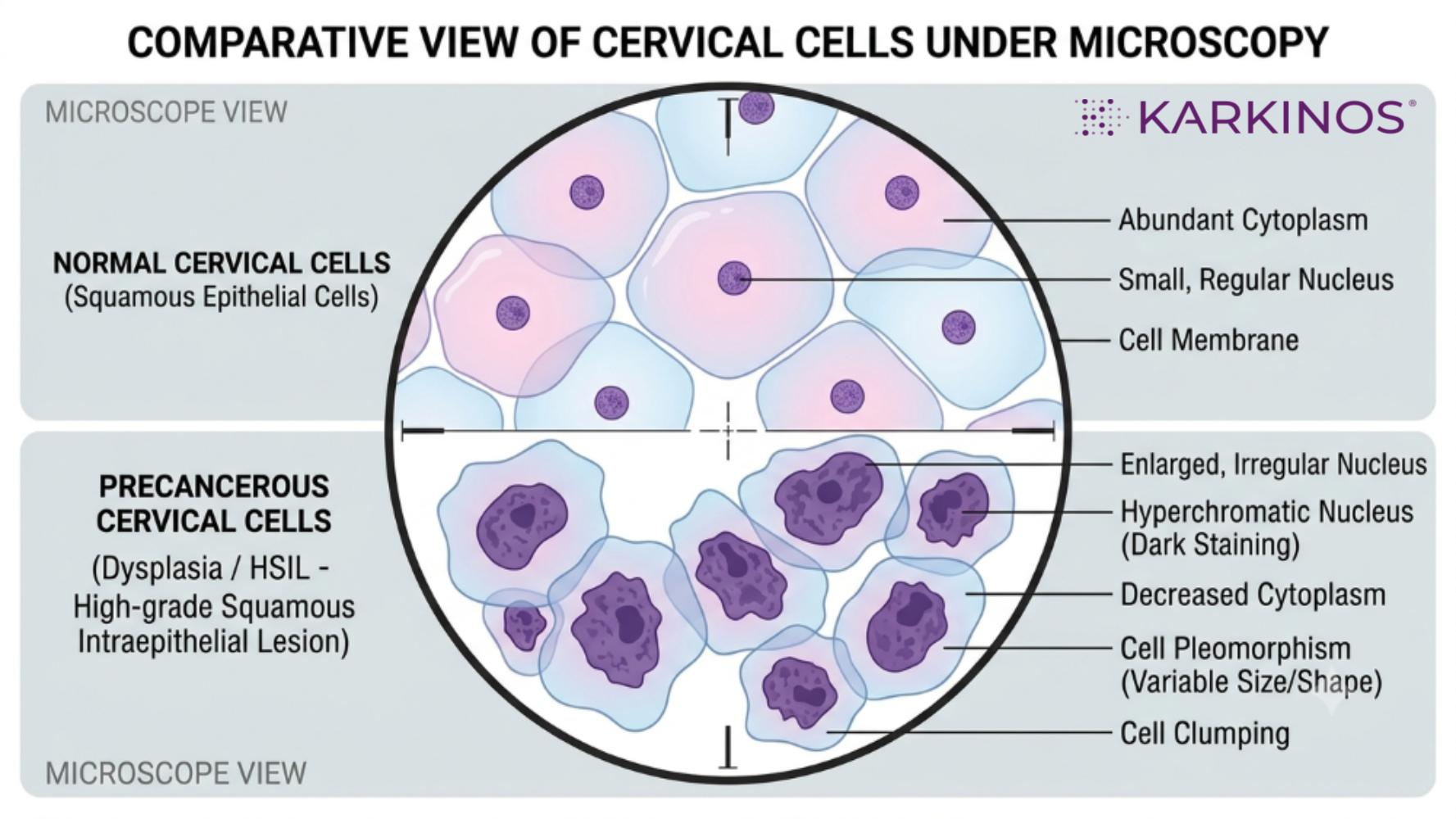
This stage is known as precancer (or cervical dysplasia). It is vital to understand that precancerous cells are not cancer cells. They are simply warning signs, altered cells that have the potential to turn into cancer if left unmonitored and untreated over a long period.
| This stage is known as precancer (or cervical dysplasia). It is vital to understand that precancerous cells are not cancer cells. They are simply warning signs, altered cells that have the potential to turn into cancer if left unmonitored and untreated over a long period. |
Step 3: The Progression (10 to 15 Years)
So, how long does this transformation actually take? On average, it takes 10 to 15 years, and sometimes as long as 20 years, for a persistent high-risk HPV infection to gradually progress through precancerous stages into invasive cervical cancer.
Because cell changes happen over a decade or more, we have a wide window of time to act.
Why Routine Screening Is So Effective
Because the timeline of cervical cancer is so gradual, simple screening tools are extraordinarily powerful:
- HPV Testing: Identifies high-risk HPV strains early, letting you and your doctor know when you need closer monitoring.
- Pap Smear (Pap Test): Examines cervical cells under a microscope to detect abnormal changes long before they become serious.
If screening finds abnormal or precancerous cells, healthcare providers can treat or remove them quickly during a routine clinic visit. This means routine screening doesn’t just catch cervical cancer early; it actually prevents cancer from developing in the first place.
Taking Early Control of Your Cervical Health
Understanding the natural timeline of cervical cancer transforms fear into empowerment. You don’t have to feel anxious about surprises. Instead, remember that time is on your side.
By keeping up with your recommended screening schedule (and discussing HPV vaccination with your doctor), you take full advantage of the opportunity every woman has to stop cervical cancer before it ever starts. Contact your healthcare provider today to make sure you’re up to date on routine screening!